
Deworming Facts and Myths
Apr 27, 2026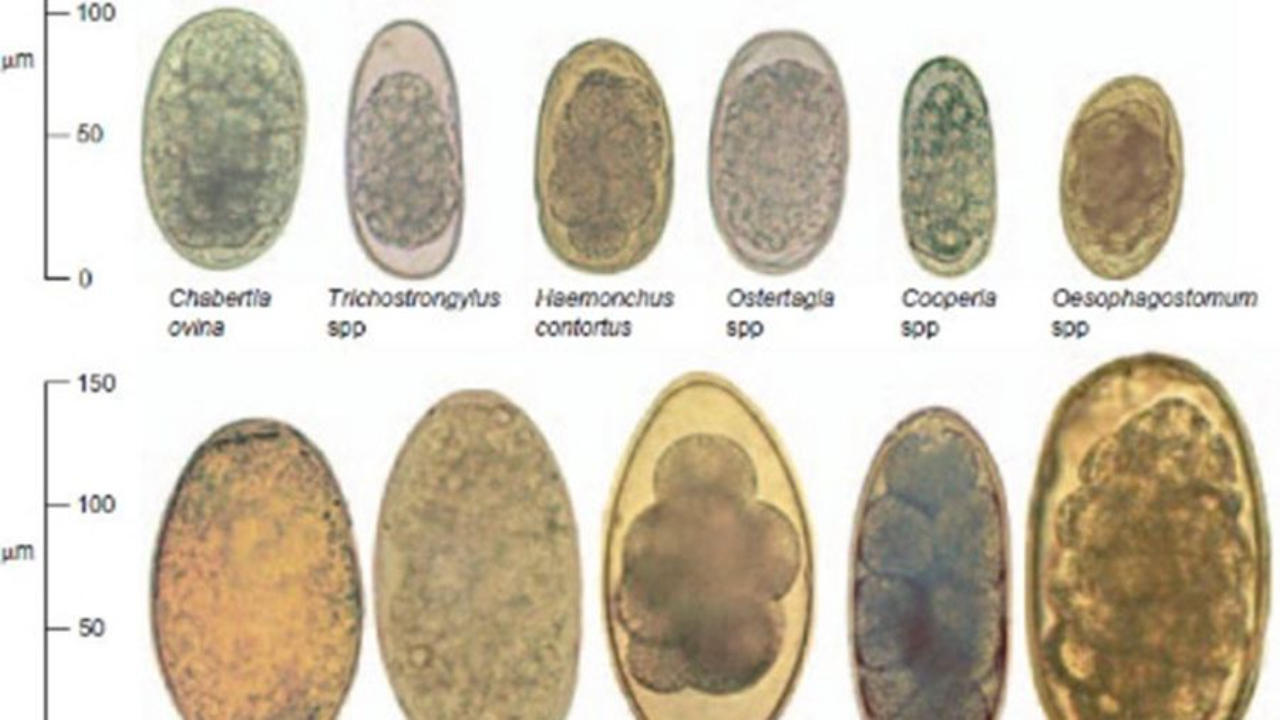
Deworming Facts and Myths
Parasites are a real, costly problem—but reflexively reaching for a dewormer every time an animal looks off is a fast way to waste money, build drug resistance, and miss the true diagnosis. Many performance, coat, or weight issues get blamed on “worms” when nutrition, dental disease, minerals, pain, or chronic infection are the real culprits. Let’s separate facts from myths and put you back in control of parasite management.
The Big Picture: Treat Less, Target More
Most operations overuse dewormers. Blanket, time-based dosing (“every other month” or “quarterly”) selects for resistant parasites, often without improving animal health. The smarter strategy is to treat the right animals, at the right time, with the right product—and then measure whether it worked. "Trust but verify."
Know Your Drug Classes (or You’re Just Repeating Yourself)
The common dewormers fall into three major classes. Products within a class share a similar mode of action; rotating or stacking drugs from the same class is not creative—it’s redundant. Worse, it accelerates resistance.
- Macrocyclic Lactones (MLs)
- Drugs: ivermectin, doramectin, eprinomectin, moxidectin
- Trade names (examples): Ivomec, Dectomax, Eprinex, Cydectin/Quest, Valcor (Includes Levamisole,
- Notes: Broad activity; resistance is widespread in many regions. Potent—avoid underdosing. There are concentrated compounded products.
- Benzimidazoles (BZDs)
- Drugs: fenbendazole, albendazole, oxfendazole
- Trade names: Panacur/Safe-Guard (fenbendazole), Valbazen (albendazole), Synanthic (oxfendazole)
- Notes: Often effective when correctly dosed by accurate body weight and given at adequate duration.
- Imidazothiazoles
- Drug: levamisole
- Trade names: Prohibit, LevaMed (regional variations), Valcor (Includes Dormectin)
- Notes: Narrower safety margin; highly effective when used correctly. Careful dosing is critical. There are concentrated compounded products.
Why this matters: If you deworm with Ivomec (ivermectin, an ML) and then “switch” to Cydectin (moxidectin, also an ML), you did not switch classes. If your parasites are resistant to MLs, you essentially gave the same type of drug twice.
Copper Boluses: What We Know and Don’t
Some ranchers use Santa Cruz copper boluses (copper oxide wire particles) as part of a deworming program. Field experience suggests this can be anecdotally effective and generally safe in certain species, though robust research is limited. The people that I work with that use it, are strong believes in this method. Do not use in copper-sensitive species (e.g., sheep), and be cautious in any herd with mineral imbalances or prior copper issues. View copper boluses as a management adjunct, not a silver bullet.
See this article from the Mississippi State University Extension Service.
A bit of real world info: The Santa Cruz copper boluses come in large capsules with copper pellets in them. If you simply place the copper pellets on the feed, they seem to fall to the bottom of the feed and not be consumed. It is helpful to add the pellets to something sticky like molasses then mix that in with the feed.
Management That Lowers Worm Pressure (So You Treat Less)
The further you get away from the natural way that animal has evolved to live the more responsibility is placed on your shoulders. Drugs can’t fix a pasture or management problem. In other words, you will have to spend your way to success if you have poor management practices.
These low-tech management steps meaningfully reduce parasite exposure:
- Keep pelleted feed off the ground.
Animals defecate while eating. Pellets spill onto fresh manure; the next animal hoovers them up—worms included.
Fixes: Use feeders with lips or trays, hang/raise troughs, and move feeders at least 10 feet regularly to a clean surface. - Reduce standing water and avoid irrigating with animals present.
Short, wet grass is parasite heaven. If you must irrigate, pull animals off, let pastures dry and regrow before re-grazing. - Don’t graze short grass.
Infective larvae concentrate in the lowest part of the grass. Maintain adequate grass height and rotate before the pasture is “mowed” by mouths. Grazing grass that is too short for many grazers increases cortisol levels which decreases their immune system function. - Protect browsers from turning into grazers.
When natural browse is scarce, browsers drop their heads and start grazing—parasite exposure spikes. Supply browse or supplemental feed at height to keep eating behavior aligned with their biology. Forcing a browser to graze on the ground increases cortisol levels which decreases their immune system function.
Preventing (or Slowing) Drug Resistance
You can’t undo resistance on your ranch once it’s established, but you can slow it down:
- Don’t medicate continuously in feed or water. Constant low doses select for resistance.
- Don’t underdose. Weigh animals when possible if you cannot accurately estimate weight. Dose for the heaviest in the group (or, better, individual-dose valuable animals).
- Don’t treat healthy, low-shedding animals “just because.” Treating healthy shedders preserves a population of susceptible worms (“refugia”), which dilutes resistance genes with less pathogenic populations of worms.
- Ditch the calendar schedule. Time-based deworming ignores weather, pasture pressure, age class, and actual need which increases parasite resistance to
Smarter Decisions With Objective Data
“I think they’ve got worms” is not a plan.
Build an evidence-based loop:
- Fecal Egg Counts (FEC): Sample a meaningful subset of animals (e.g., 10–15), including any thin, rough-coated, or lagging individuals. Identify high shedders for targeted treatment.
- Fecal Egg Count Reduction Test (FECRT): Collect FECs on Day 0, treat with a single, chosen product, then recheck FECs 10–14 days later (species/drug dependent). Calculate % reduction to see if your product still works on your ranch.
- Record-keep ruthlessly: Date, product, dose, pasture, weather, and outcomes. Patterns pop quickly when you write things down.
- Coordinate with your veterinarian on thresholds, sample timing, and special species considerations (exotics, juveniles, late gestation, etc.).
Putting It All Together
- Myth: “If I change the brand, I’ve changed the dewormer.”
Fact: Brands within the same class act the same way; resistance crosses brands. - Myth: “More often is safer.”
Fact: Frequent, untargeted dosing breeds resistance and often misses the real problem. - Myth: “Copper boluses replace dewormers.”
Fact: They appear to help in selected situations, but they’re an adjunct to a complete plan —and not appropriate for copper-sensitive species like sheep. - Myth: “Pasture management is optional.”
Fact: It’s the backbone of parasite control. Feed and water placement, grass height, and rotation patterns dictate exposure.
Conclusion
I’m not saying worms are never the problem—parasites are a major challenge we deal with all the time. I am saying that good outcomes come from informed decisions based on objective data. Know your drug class, fix the pasture risks, and prove your dewormer is still working on your herd by implementing Fecal Egg Counts and Fecal Egg Count Reduction Tests.
Add Fecal Egg Counts and Fecal Egg Count Reduction Tests to your herd management plan this season. Choose a dewormer with a specific goal, dose it correctly, and measure the result. Treat less, target more—and protect the tools that still work. Get with your veterinarian to learn more about these tests.
If you are looking for a great microscope, here is one I have used and recommend: MICROSCOPE
Note: This article is for informational purposes only and not intended to be interpreted as veterinary advice for your herd. I am not making herd specific recommendations for your herd. Get with your veterinarian to get herd specific advice for your herd.
Stay connected with news and updates!
Join our mailing list to receive the latest news and updates from our team.
Don't worry, your information will not be shared.
We hate SPAM. We will never sell your information, for any reason.
